The NIST Special Publications Library of Standards & Guidelines for Security Architects.
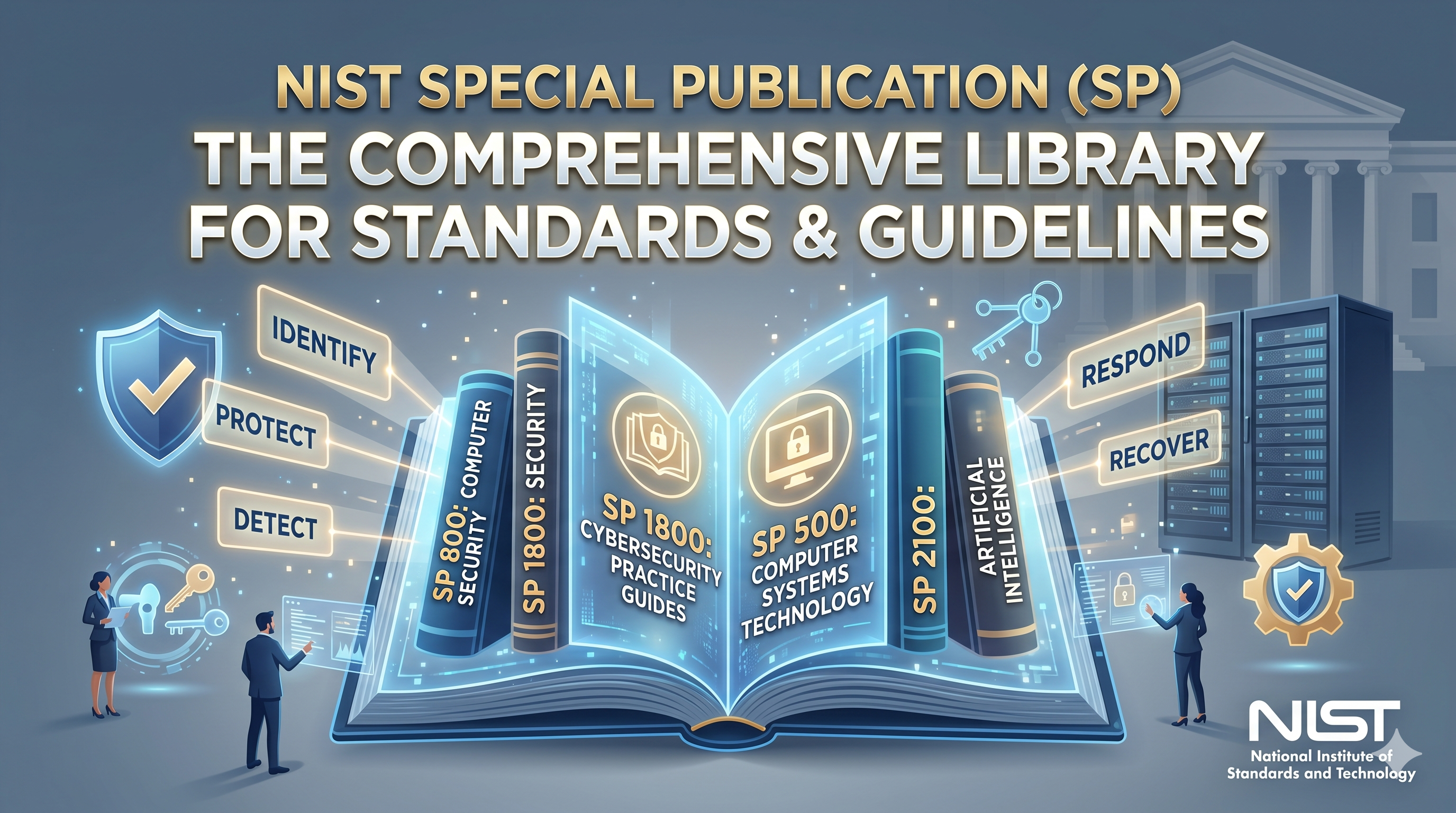
Learn how NIST Special Publication library empowers security architects to bridge the gap between high-level governance and technical implementation, providing a vendor-neutral roadmap for building standardised, resilient, and future-proof enterprise architectures.
- What is NIST?
- NIST Special Publications (SP)
- SP 800-Series: Computer Security
- SP 1800-Series: Cybersecurity Practice Guides
- SP 500-Series: Computer Systems Technology
- SP 2100-Series: Artificial Intelligence
- Summary
In the rapidly shifting landscape of digital threats, having a reliable architectural blueprint is essential for any resilient security program.
The National Institute of Standards and Technology (NIST) provides this foundation through its expansive Special Publication library, including the foundational 800-series standards, the practical 1800-series playbooks, and specialised guidance in the 500 and 2100 series.
Whether you are securing a small startup, navigating the complexities of AI, or implementing a federal framework, understanding these diverse publications is the first step toward mastering modern cybersecurity.
What is NIST?
The National Institute of Standards and Technology (NIST) is a non-regulatory agency of the United States Department of Commerce. Founded in 1901, its primary mission is to promote U.S. innovation and industrial competitiveness by advancing measurement science, standards, and technology.
While NIST covers everything from the “official” time in the U.S. to the strength of structural steel, it is most famous globally for its leadership in Cybersecurity and Information Security standards.
NIST Special Publications (SP)
The NIST Special Publication series is the official repository for the agency’s research, technical standards, and best practice recommendations across a vast range of scientific and industrial disciplines.
Organized into distinct subseries, these publications provide authoritative guidance on everything from computer systems technology to cybersecurity practice guides.
SP 800-Series: Computer Security
The SP 800-series is the primary collection of NIST’s cybersecurity standards and guidelines, serving as the global “gold standard” for information security management. It provides the essential frameworks and technical controls used by organizations to identify risks, protect assets, and respond to digital threats. These documents are vendor-neutral and range from high-level strategic policy to granular requirements for specific security technologies.
Identity & Access Management (IAM)
These publications define the standards for verifying who a user is and ensuring they only have access to the data they absolutely need. By focusing on Zero Trust and multi-factor authentication, these guides help prevent the most common cause of breaches: compromised credentials.
- SP 800-63: Digital Identity Guidelines (includes 63A, 63B, and 63C)
- SP 800-162: Guide to Attribute-Based Access Control (ABAC)
- SP 800-207: Zero Trust Architecture
- SP 800-210: General Access Control Guidance for Cloud Systems
SP 1800-Series: Cybersecurity Practice Guides
The SP 1800-series acts as the practical “how-to” companion to the 800-series by demonstrating how to solve real-world cybersecurity challenges. Developed by the National Cybersecurity Center of Excellence (NCCoE), these guides provide step-by-step instructions for implementing NIST standards using specific combinations of commercially available products.
They are designed to help organizations move quickly from theoretical security concepts to functional, multi-vendor technical solutions.
SP 500-Series: Computer Systems Technology
The SP 500-series covers broad computer science and information technology research, including foundational standards for cloud computing, biometrics, and software engineering. While not exclusively focused on security, these publications define the technical infrastructure and data formats that cybersecurity professionals must protect.
In recent years, this series has become a critical resource for understanding software supply chain security and interoperability in diverse IT environments.
SP 2100-Series: Artificial Intelligence
The SP 2100-series is NIST’s specialized library for managing the unique risks and safety requirements associated with Artificial Intelligence systems. It provides the governing principles for the AI Risk Management Framework, focusing on essential concepts like trustworthiness, bias mitigation, and transparency.
As AI adoption grows, this series serves as the definitive guide for securing machine learning models and ensuring they are deployed ethically and safely.
Summary
The NIST Special Publication library, spanning the 800, 1800, 500, and 2100 series, serves as an invaluable, vendor-neutral ecosystem that covers everything from high-level risk management to the practical implementation of AI safety and cloud security.
By adopting these frameworks, organizations can move beyond reactive security and implement a proactive strategy built on proven best practices and emerging trends like Zero Trust and Post-Quantum Cryptography.
Ultimately, these publications provide the clarity and structure needed to protect sensitive data and maintain operational integrity in an increasingly complex and automated digital world.